
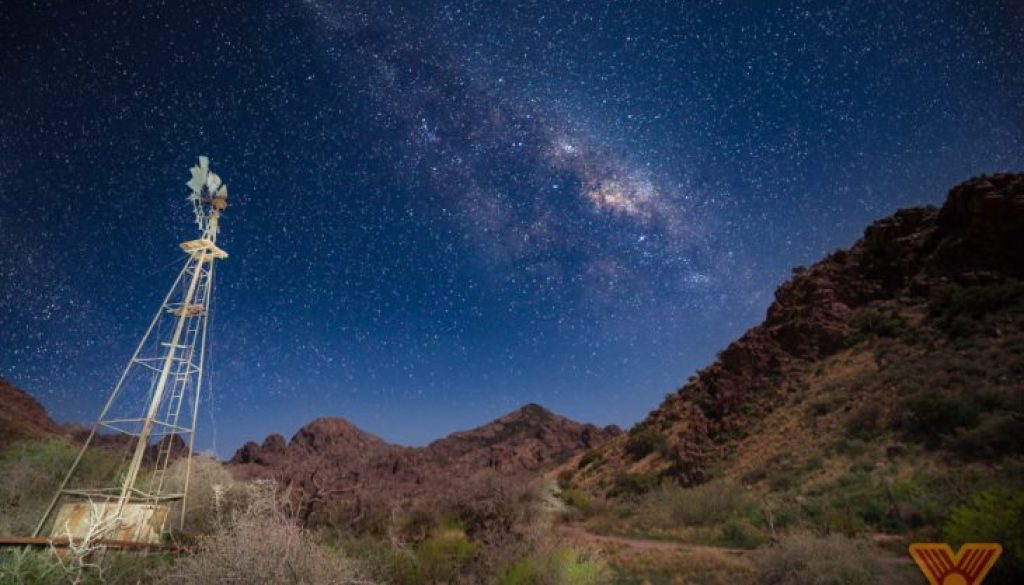
Taking stunning photos at night!
The key to Night Photography

Night Photography can be a bit tricky, but when done right, the results are extremely rewarding. Whether your are just an intermediate photographer, or a professional, revealing the hidden beauty of the night sky is such a gratifying experience every time.
It can be as simple as a camera mounted on a tripod, to a liquid-cooled CCD camera. Many of us, (including myself) can’t afford extremely expensive cameras. So there are questions like, “What lens should I use?” or “What’s a good camera on a budget?” These are all excellent questions, and I will make a list at the bottom of this post listing the best cameras and lenses for different budgets.
When taking photos at night, there are a few key things to keep in mind, and it’s as easy as 1, 2, 3… literally!
1. Location

If you want to get astonishing results when taking photos at night, one of the most important things is the location. The best locations to shoot at is where there are no cities or lights nearby. A great site to check out is Dark Sky Finder. This amazing website allows you to view light pollution on a map so you can see the darkest areas to determine where you should shoot. It’s not entirely necessary to shoot away from cities, but if you want the clearest view of the Milky Way and stars, it’s best to shoot in dark areas.
2. Lenses

Using the kit lens that came with your DSLR will work, but these lenses are not very sharp, and the F-Stop is normally F-3.5 or higher. Having a lens with a wide aperture is very important. The best lenses for the buck are prime lenses. These lenses can’t zoom, but usually, the F-Stop on these lenses are incredible! The lower the F-Stop or the wider the Aperture, the better. Anything from F2.8 and below should be perfect. This allows the sensor inside your camera to capture more light, thus making your image brighter.
3. Settings


If you are just getting into photography, getting the right settings on your camera can be confusing and frustrating. The best mode to use on your camera is Manual Mode. This allows you to change your Aperture, Shutter, and ISO independently. Once you understand the fundamentals of each of these key factors, you will have no problem setting up your camera for a night shoot.
Aperture

As I previously stated, lenses with a very wide Aperture are the best for astrophotography. Usually when in Manual Mode, you will see a group of numbers preceded by “F”. This is your aperture. The lower this number is, the more light you allow your sensor to capture. When you are shooting at night, make sure this number is as low as possible.
Shutter

Shutter speed, also known as “exposure time”, stands for the length of time a camera shutter is open to expose light into the camera sensor. If the shutter speed is fast, it can help to freeze action completely. If the shutter speed is slow, it can create an effect called “motion blur”, where moving objects appear blurred along the direction of the motion. So if want to achieve the effect of star trails, you can set your camera to a very slow shutter of 30 seconds, or BULB mode, which allows you to take as long of an exposure as you want. Remember that the longer the exposure, the more light the sensor is able to capture. If you are not looking to capture star trails, it’s best to shoot with a shutter of 5 to 20 seconds.
ISO

ISO controls the sensitivity of the sensor. This means that if you have your ISO at 100, your image will have little to no grain or noise. If you raise it to a higher number like 3200, your image will be brighter, but it will be very grainy on most cameras. So it’s best to have your ISO as low as possible while maintaining good light for your image.
Now that you understand how your camera works, go take some awesome night photos! When you do, please email them to us at [email protected] to possibly be featured.
As promised, here is the list of cameras and lenses for different budgets. Happy Shooting!
Entry
Cameras: Nikon D5500 – Sony a6300
Lenses: Rokinon 14mm f/2.8 Lens For Nikon – Rokinon 14mm f/2.8 Lens For Canon
Mid
Cameras: Sony A7s or A7s II – Canon 5D Mark III
Lenses: Rokinon 14mm f/2.8 Lens for Sony – Rokinon 14mm f/2.8 Lens For Canon
Pro
Cameras: Nikon D5 – Canon EOS-1D X Mark II
Lenses: Nikon 14-24mm f/2.8G – Canon EF 14mm f/2.8L


April 11, 2017 @ 9:29 pm
+J.M.J.+ I took photography in high school, and found this article very educational especially for newer cameras. The links are helpful too. Thanks for posting, and please post more educational articles like this. Something about Cinematography would be Interesting.